Artist Statement
Ché Hough · Studio PracticeChé Hough is a sculptor and former yacht captain working from Pearly Beach, on the southern tip of Africa.

Energy, Held in Form
Ché Hough’s work reads the ocean the way a sailor reads its surface: not as scenery, but as energy held in form.
At the core of this practice is A1, a mineral-acrylic composite. Selected with a mariner’s exacting specification, the composite functions both as the primary structural medium for architectural reliefs and as the internal armature for bound sculptural forms — uniting structural rigidity and lasting durability with an essential lightness.
The practice is fundamentally an exercise in transmutation. The resulting works translate the navigational, material and environmental understanding earned across 139,500 nautical miles into spatial interventions.
Navigational Typology
Observed across twenty-five years of global seamanship — with sustained field research in the Dutch and French Caribbean and the Bahamas — the studio’s Navigational Typologies derive directly from ocean crossings, working charts, reef and dive surveys, material research and prototyping, and seamanship under sail and power. They are not invented abstractions, but physical readings of ocean energy extracted from the helm.
Poetic Taxonomy
In 1993, an internship in biological classification at the East London Museum — home to the coelacanth — trained Ché Hough’s gaze on negative space and structural form. For his final examination, rather than depicting a known specimen, he painted an imagined skeletal system: a poetic taxonomy belonging to no existing species.
Over twenty-five years of seamanship, the same logic reads not imagined bone but living force: the breach, the glide, the collective turn. The Navigational Typologies are the poetic taxonomy, no longer invented. Observed.

The Space Anchor
Navigational Typology is the studio’s structural methodology, organising twenty-five years of maritime field research into six core categories—velocity, entanglement, the threshold, the gaze, multiplicity, and the invisible law—and an applied spatial framework. Extracted from working charts, reef and dive surveys, material prototyping, and seamanship under sail and power, these forms translate the physics of fluid motion into permanent physical mass. Functioning as architectural interventions rather than standalone decorative objects, the typologies use the tension of oceanic force to restructure the volume, light, and movement of the interior environment.
Materials & The Exposure Site
The practice relies on A1, a mineral-acrylic composite chosen for its structural rigidity and lasting durability. Specimens are being sited at Suiderstrand to record how the composite weathers salt, wind, sand and UV. This material honesty grounds the oceanic geometries in physical mass.
The Specimens
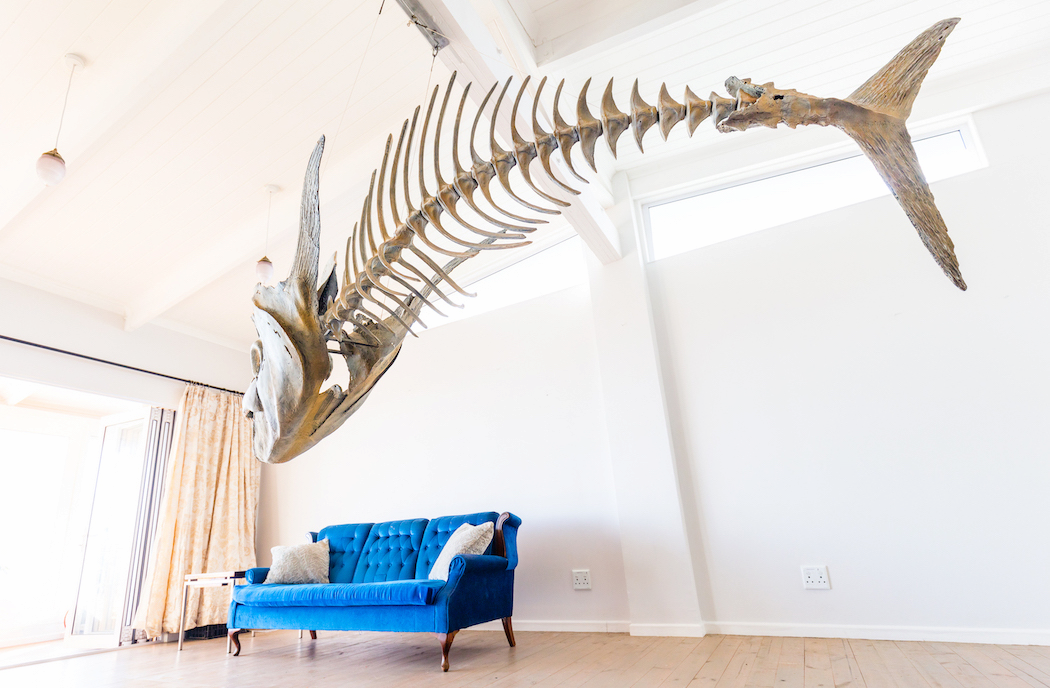
Suspended skeletons. Essential structural truth without surface noise.
Anatomy of Velocity
The Specimens — The Architecture of SpeedThree metres of hand-formed structure capturing the architecture of speed. Suspended from a single line, they resize the surrounding volume: the ceiling becomes surface light, the floor becomes depth.

Anatomy of Velocity II
The Specimens — The Stillness of the StrikeCapturing the stillness of a strike. A moving shadow tracks the sun, rendering time visible within the space.
The Entanglement
Ghost gear and repurposed rope reformed into structures of weight and grace.

Ghost Tide
The Entanglement — The Precursor, 2022Cold aluminium and netting. The precursor. An unsaleable witness retained in the studio.
One of a kind · Not for sale

Ghost Tales
The Entanglement — The Collected RopeCollected strand from the tideline. Transforms tideline marine debris into a line of structural tension.

Ghost Whale
The Entanglement — The Heavy LineSalt-faded industrial marine rope. Working gear that has outlived its vessel, unbound and restructured to give physical weight and anchoring gravity to an interior.
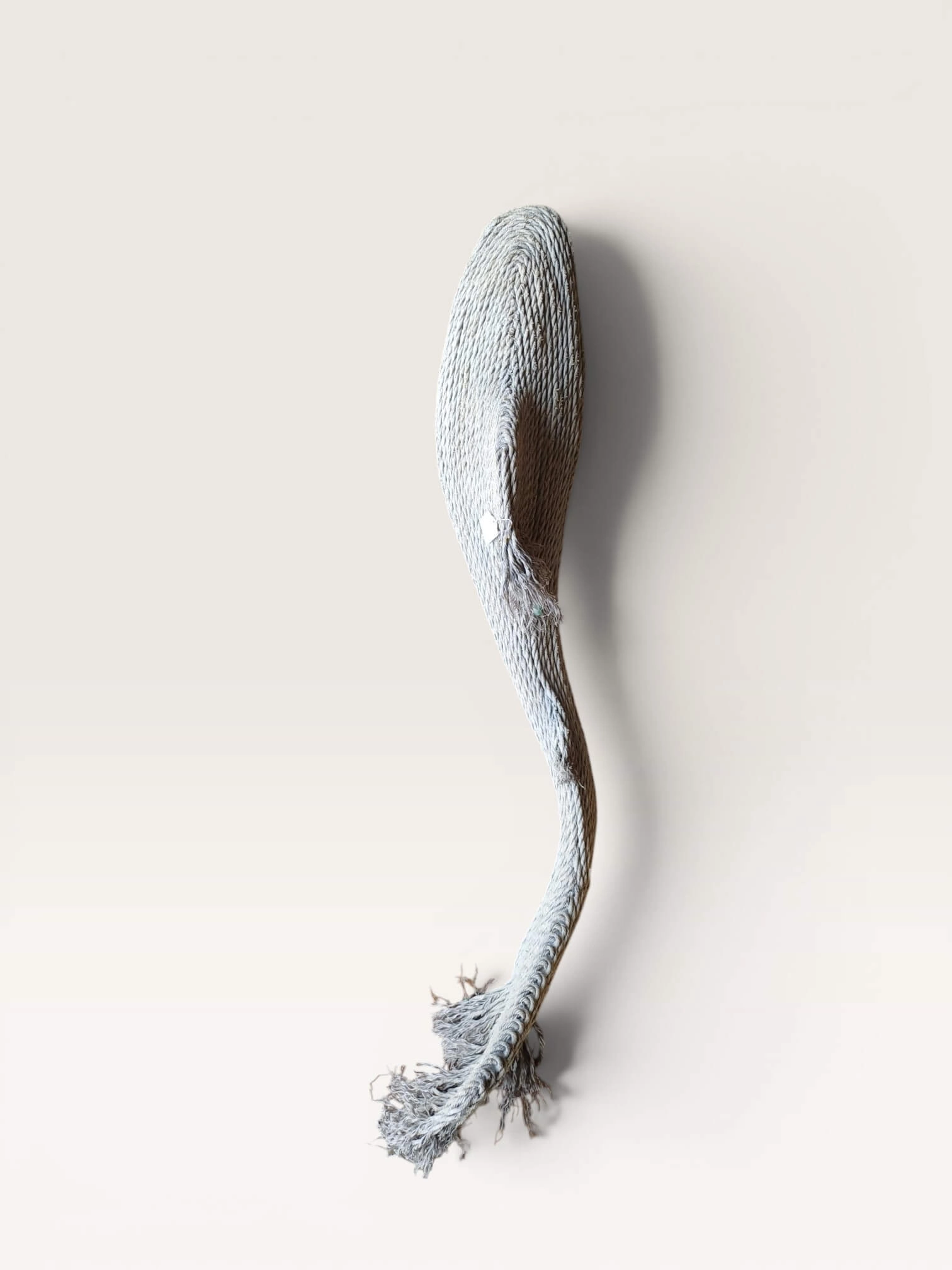
Ghost Shark
The Entanglement — The Apex ShadowRepurposed rope. The apex predator stripped to its structural skeleton, retaining the hydrodynamic tension of the strike without the surface noise.
Surface Tension
Fragments at the liminal coordinate — the fluke, the dorsal, the silhouette of a breach. At the instant a body crosses the waterline the whole animal is never seen; only the part that breaks the plane.

Cartography of a Breach
Surface Tension — A Reading Drawn OnceHand-drawn contour maps on monumental fluke forms. Infuses deep, resonant calm into surrounding light and volume.

Dolphin Tail, in Flow
Surface Tension — PropulsionPropulsion after direction. Sets the room in motion, revealing the force that drives the heading forward.

Dolphin Dorsal, in Flow
Surface Tension — DirectionDirection before movement. Sets the room in anticipation of action, marking the heading before the body follows.

Apex Silhouette
Surface Tension — The Ancient FormHydrodynamic flow in cast form. Commands immediate stillness, bringing hydrodynamic focus and primordial geometry into physical space.
The Crossing
Whole creatures caught in the act of crossing — airborne, suspended, diving — each with an open eye that returns the look. The threshold holds the trace; the crossing holds the witness.

Piscis Volans
The Open Eye — Becoming FreeAirborne geometry. Flight captured at the boundary of survival, translating effort into suspended grace.
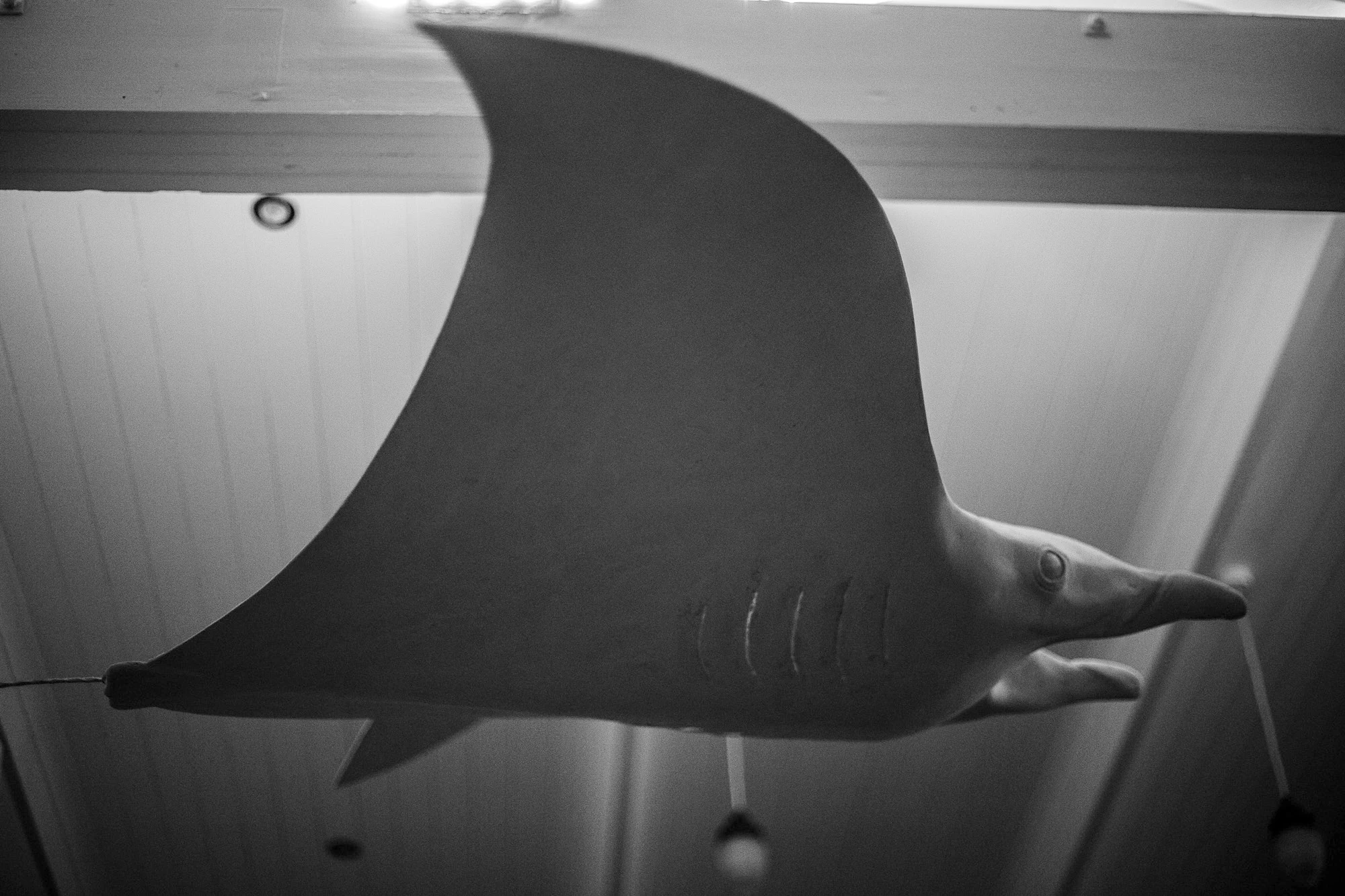
Manta
The Open Eye — The Returned GazeSuspended wing geometry. The second of the whole creatures that look back — a held glide that slows the room’s air to the speed of a current.
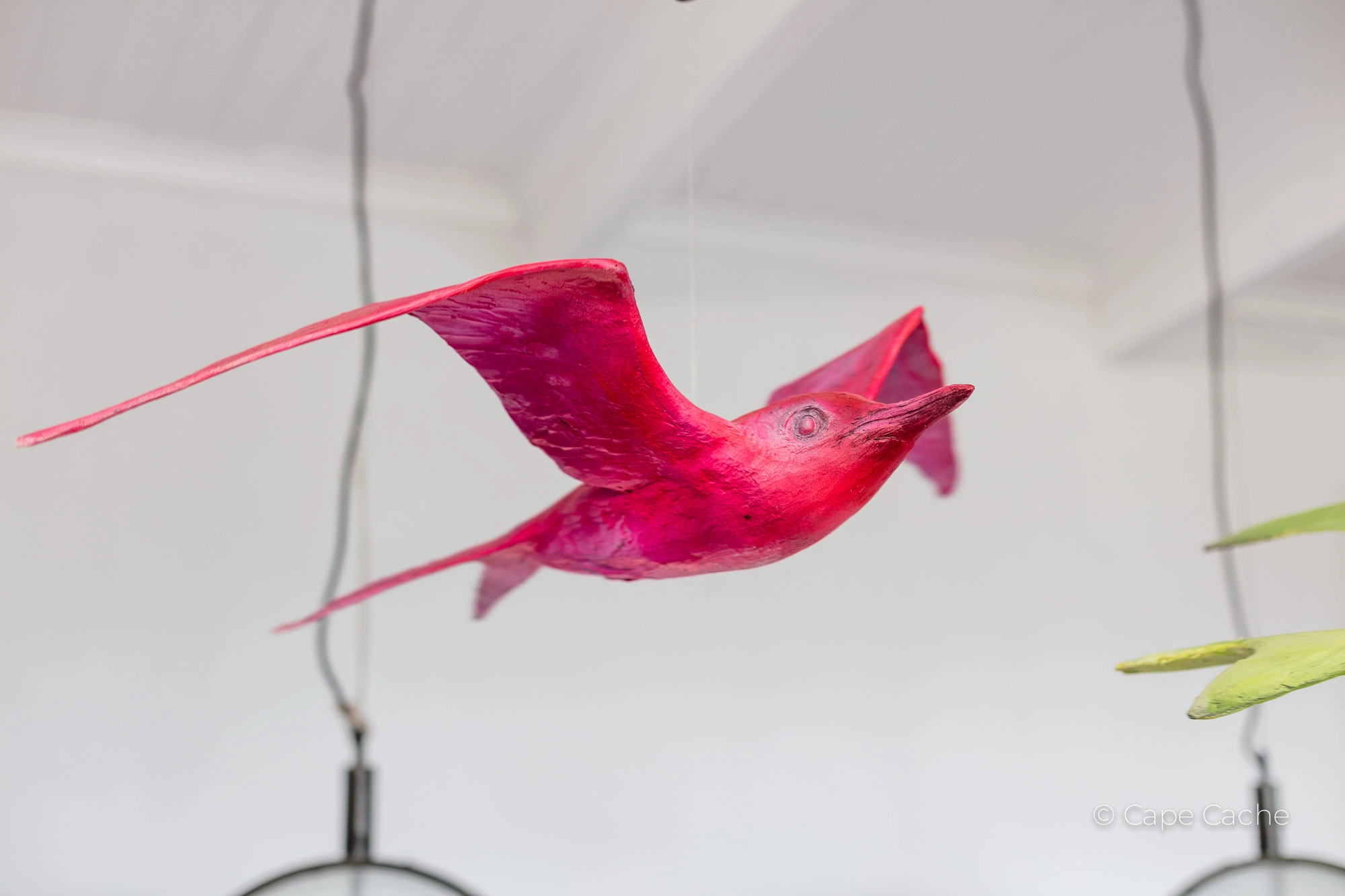
Tern Around
The Open Eye — The FlockA hanging installation of four Arctic terns, suspended in the held instant before the dive. The third of the whole creatures that look back — and the only work in the Gaze built as a flock rather than a single body.
The Collective Body
Shared force over individual isolation.

The Sardine School
The Collective Body — The Running SchoolModular wall currents. Translates lateral schooling movement into a linear wall current of shared momentum.

Sagax
The Collective Body — The RotationRotational configurations. Rotational wall geometry that draws the volume of the room into an accelerating centre.
The Visible Force
The rules you cannot see — the mathematics of the weather, the geometry of the wave, the growth of the shell — expressed as force you can.

The Beaufort Scales
The Invisible Law — What the Wind Does to the WaterVolumetric discs translating wind force into cartographic isobars. Establishes navigational calm inside turbulent space.

Fibonacci’s Back Door
The Invisible Law — The Formed-Law WaveThe golden ratio of a breaking wave. Instils structural trust through organic geometry and unconventional entry.

Midden
The Invisible Law — The Grown-Law SpiralShell-core reliefs. Controls how light and acoustic resonance move across a wall.
Applied Tectonics
The same coastal logic, applied to the spaces and objects we inhabit. Functional forms, tactile surfaces, and architectural spatial interventions.
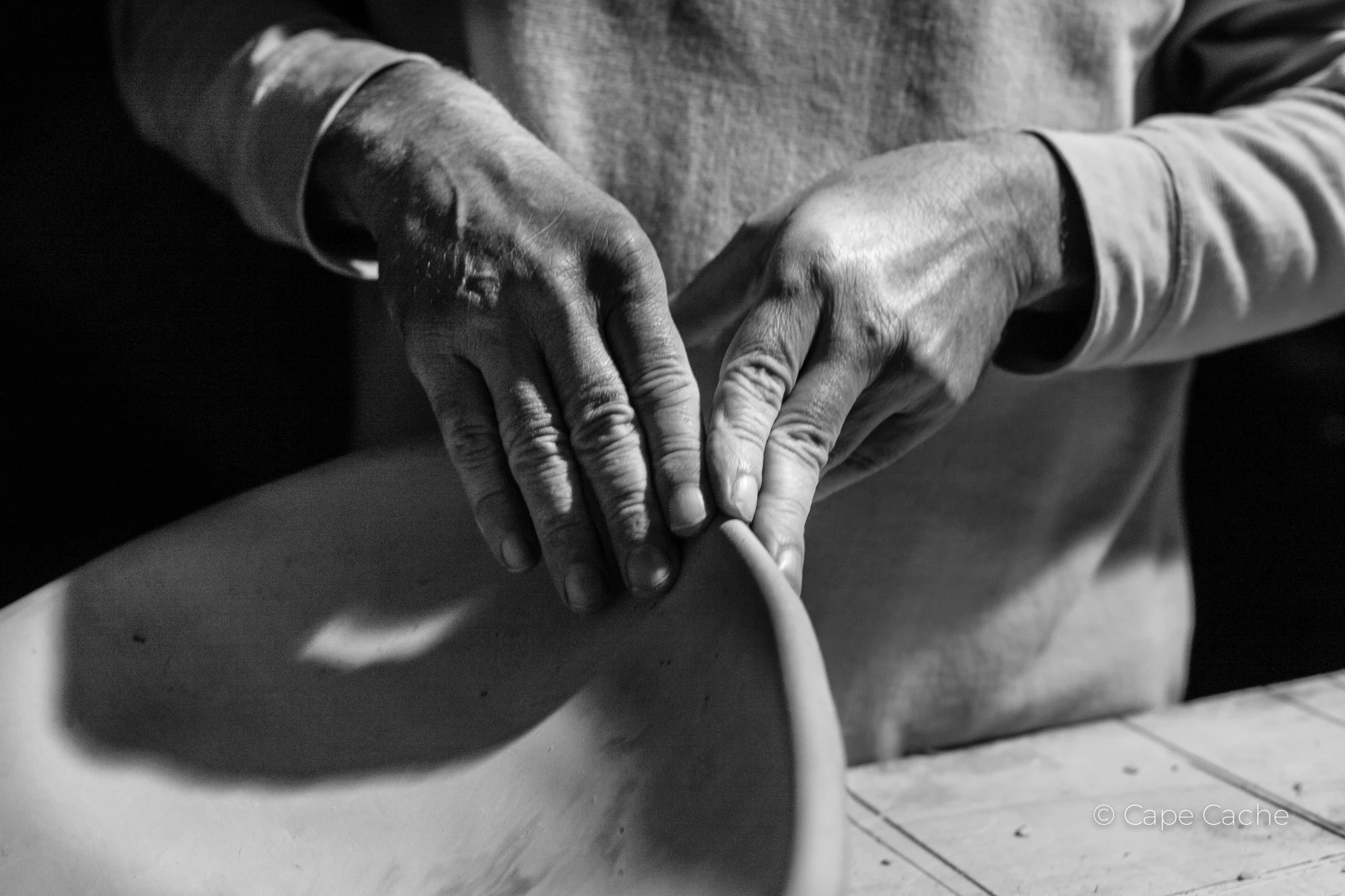
Elemental Vessels
Functional Sculpture — The Scale of the RoomCast ceramic armatures and vessels that embed raw coastal geology into daily domestic ritual.

The Surface · Tiles
Functional Sculpture — Series 01 · GFRC Hex & Ceramic Relief · SingularSeries 01 · GFRC Hex, the modular module cast for the envelope, and Ceramic Relief · Singular, the tile made once. Modular surface architectures designed for the building envelope.
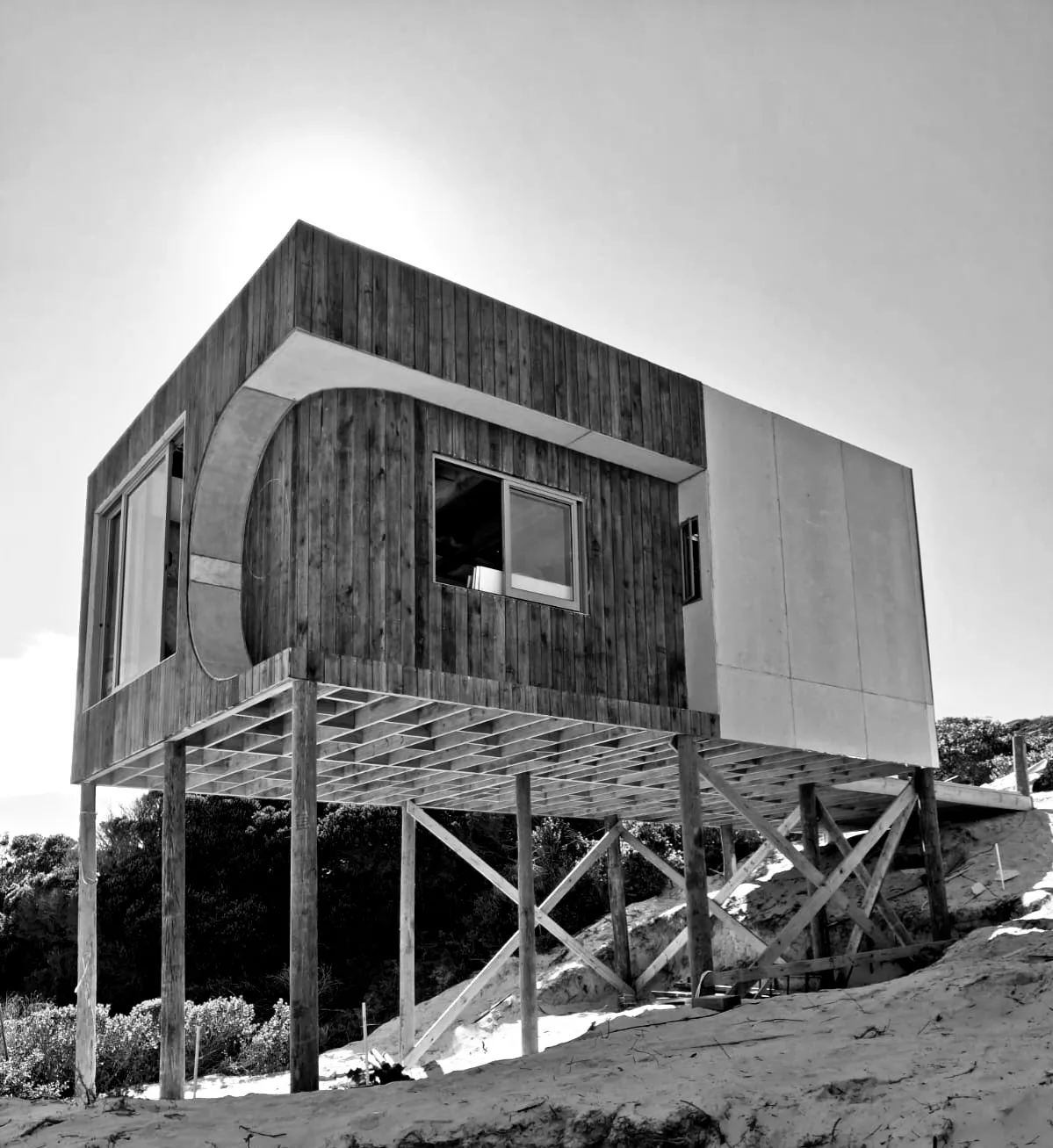
The Honeycomb
Functional Sculpture — The AnchorThe Honeycomb at Suiderstrand. The ultimate anchor of the practice: a full-scale residence built directly into the coastal exposure site.
Commission a Work
Site-specific commissions begin with the space itself—its light, its volume, and its silence. From there, the form finds itself.
Begin a conversation