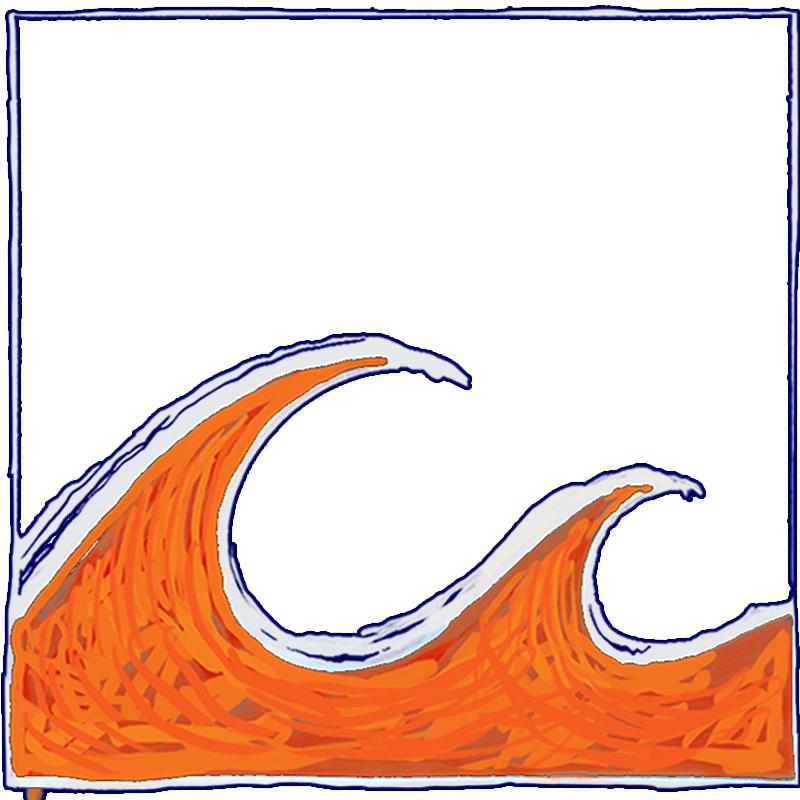

The Beaufort Scales
Ocean Disc Series
Sir Francis Beaufort didn’t measure the wind — he measured how water reacted to it. An indexical system translating atmospheric friction into permanent spatial geometry.
Description
The Beaufort Scales translates Sir Francis Beaufort’s 1805 wind scale into sculptural form — an indexical system where the spatial depth of each disc correlates directly to the kinetic energy of its assigned wind state. The method is indexical, not illustrative: Beaufort’s scale was built for sailors without instruments, a way to log wind force from what the sea was visibly doing, from calm to hurricane.
Each disc anchors a room through absolute navigational order, translating chaotic atmospheric energy into a readable, structural presence. Force 3 (gentle breeze, 7–10 knots) manifests as a shallow 20 mm profile in silver graphite — a surface-level equilibrium. Force 4 (moderate breeze, 11–16 knots) expands to an 1100 mm diameter surface field inscribed with cartographic isobars — the notation of pressure systems rendered in acrylic. Force 6 (strong breeze, 22–27 knots) commits volumetrically at 240 mm depth — rendering the subsurface weight of a gale in turquoise layered over bronze.
The full 0–12 taxonomy remains open — individual forces or complete series can be commissioned, developed in dialogue with your space.
Specification
- Medium
- Hand-sculpted water-based acrylic resin
- Method
- Indexical — spatial depth correlates to kinetic energy (20 mm–240 mm)
- Source
- Sir Francis Beaufort’s 1805 wind scale
- Taxonomy
- Scale 0–12 · open for commission
- Edition
- Open taxonomy of uniques — no two matrices alike
- Status
- Force 3 placed · Forces 4 & 6 available · Full 0–12 open
Beaufort 4
Moderate Breeze · 11–16 knots · Navy resin ground with hand-drawn cartographic isobars


Force 4 denotes steady, working friction — moderate movement across a consistent swell. At 1.1 metres, it forms the largest matrix in the series to date, operating as both a sculptural field and a cartographic surface with hand-drawn acrylic pressure lines.
- Status Available
- Scale 1100 mm (43.3 in)
- Materials Resin, navy, acrylic line-work
Beaufort 6
Strong Breeze · 22–27 knots · Turquoise and bronze


Force 6 marks a structural shift from surface ripple to volumetric commitment. At 240 mm deep, this matrix physicalizes the subsurface weight of the gale, finished in shimmering turquoise layered over a deep bronze undertow.
- Status Available
- Scale 1000 × 240 mm (39.4 × 9.4 in)
- Materials Resin, turquoise, bronze
Beaufort 3
Gentle Breeze · 7–10 knots · Silver graphite patina


Force 3 captures the threshold of activation — large wavelets and glassy crests forming under light atmospheric drag. Finished in a monochrome silver graphite patina, the shallow 20 mm profile reflects a surface-level state of equilibrium.
- Status Placed
- Scale 500 × 20 mm (19.7 × 0.8 in)
- Materials Resin, silver graphite
Comparative Matrix — Three Materialized Forces
Beaufort 3
Gentle Breeze · 500 × 20 mm
Placed

Beaufort 4
Moderate Breeze · 1100 mm
Available

Beaufort 6
Strong Breeze · 1000 × 240 mm
Available
Process — The Indexical Method
Hand-sculpting the disc master in clay, volumetric depth mapped to kinetic energy.
Silicone negative taken; cast in water-based acrylic resin.
Hand-inscribing cartographic isobars where atmospheric pressure demands surface mapping.
Working graphite, mineral pigments, or metallic patinas into the form.
Protective seal applied; disc rigged for wall installation.
Full process documentation is maintained in the studio archive.
Provenance
- Artist
- Ché Hough (Cape Town)
- Studio
- Cape Cache, Pearly Beach, Western Cape
- Field research
- 139,500 nautical miles at sea
- Execution
- 2025–ongoing — Pearly Beach Studio
- Authentication
- Certificate of Authenticity issued by Cape Cache for each individual work
Related in This Typology

Fibonacci’s Back Door
The golden ratio of a barrel swell, expressed as force — where The Beaufort Scales indexes wind as depth, Fibonacci indexes wave geometry as copper.
View the work →
Midden
Three readings of the grown-law spiral — the nautilus shell as logarithmic growth, the same invisible law that structures the hurricane.
View the work →Forces 4 and 6 are available for immediate acquisition. Individual forces or the complete 0–12 taxonomy can be commissioned in dialogue with your spatial requirements.
Commission Enquiries